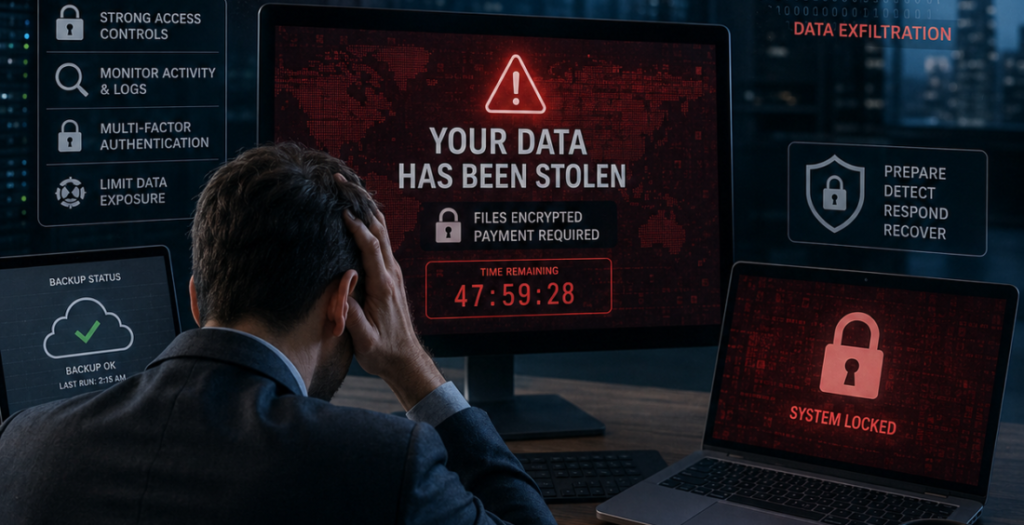

Ransomware used to bring one image to mind: locked computers, encrypted files and a demand for payment. That threat still exists, but ransomware has changed. Many attackers now focus on stealing sensitive information as much as encrypting systems.
For businesses, that creates a broader cybersecurity problem. A company may restore its servers from backups yet still face consequences if customer records, contracts or intellectual property were copied.
The pressure no longer comes only from losing access to files. It also comes from the possibility that stolen data could be leaked or sold.
Why Data Has Become the Real Leverage
Attackers understand that organizations value information as much as they value uptime.
If criminals steal confidential data before encrypting systems, they gain another way to pressure the victim. Even good backups cannot prevent concern about customers, regulators or sensitive information becoming public.
This is often called data extortion. In some incidents, attackers do not even need to encrypt anything. The threat of releasing stolen information can be enough to create urgency.
That changes how organizations need to think about ransomware. Recovery is still important, but recovery alone is no longer enough.
Backups Still Matter, but They Are Not the Whole Answer
Good backups remain essential. They can help businesses restore systems, reduce downtime and avoid being completely dependent on an attacker.
If an attacker has already downloaded confidential files, restoring systems will not erase the stolen copies. The company still needs to learn what was taken and who may be affected.
That is why ransomware preparation should include data protection, access controls, monitoring and incident response alongside backup planning.
The goal is not just to recover after encryption. It is to make it harder for attackers to reach valuable information in the first place.
Know Where Your Sensitive Information Lives
Many companies collect far more data than they realize. Old customer files, forgotten project folders and years of internal documents may remain accessible long after they are needed.
A business should know where its most sensitive information is stored and who has access to it. Customer records, financial files, legal documents, source code and employee information deserve attention.
Access should be based on business needs. Someone who does not need a sensitive folder for their job should not have permanent access to it.
Removing unnecessary data can also reduce risk. Information that no longer serves a useful purpose can become a liability during a breach.
Identity Can Be the Doorway
Ransomware attacks are not always launched through an obvious piece of malicious software. Sometimes attackers enter through a stolen account and gradually expand their access.
Strong multi-factor authentication, limited administrator privileges and regular access reviews can restrict attackers. Old accounts should be removed, and powerful permissions should not remain active without a business need.
These controls may seem routine, but they can determine how far an attacker gets after the first account is compromised.
Watch for What Leaves, Not Just What Breaks
Traditional ransomware detection often focuses on signs that files are being encrypted.
Organizations also need to watch for unusual data movement.
A user account suddenly downloading thousands of files, accessing information it rarely touches or transferring large amounts of data outside the company may deserve investigation.
Not every unusual transfer is malicious. The important thing is having enough visibility to recognize when normal behavior changes.
The earlier a company notices suspicious access, the better its chances of stopping an attack before sensitive information leaves the network.
Prepare for the Business Decisions Too
A ransomware incident quickly becomes bigger than an IT problem.
Leadership may need to decide how to communicate with customers, involve legal advisers or law enforcement, and respond if attackers threaten to publish stolen information.
Those decisions are difficult enough without making them for the first time during a crisis.
A practical incident response plan should define responsibilities in advance. Security, legal, communications, finance and senior leadership all have roles to play.
Exercises and tabletop scenarios can help teams understand those roles before a real attack happens.
Ransomware Is Now About Resilience
Modern ransomware is designed to create pressure. Attackers may encrypt systems, steal data or combine both methods.
The strongest response combines cybersecurity basics, clear visibility, sensible access controls, tested backups and a response plan that people understand.
The question businesses should ask is no longer only, “Can we restore our systems?”
They should also ask, “What information could an attacker reach before we notice?”
That question leads to better preparation because it focuses attention on the data, identities and decisions that matter most.
Ransomware will continue to evolve today. Organizations prepared for both disruption and extortion are better placed to respond without giving attackers control.
Contributed by GuestPosts.biz
Further Reading: Cyber Gear Thought Leadership Series